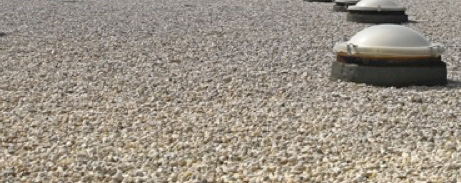
Cromar Hydrosil is a professional-grade liquid silicone roof coating that takes a fundamentally different approach to flat roof waterproofing. Where most systems rely on membranes, reinforcement, or multi-coat build-ups, Hydrosil is a single-coat, 100% silicone solution that bonds directly to almost any existing roofing substrate - no primer, no topcoat, no separate basecoat required.
Here are the questions contractors and building owners ask most often.
What is Cromar Hydrosil?
Hydrosil is a professional grade, solvent-based, single-component, moisture-cure liquid silicone roof coating manufactured by Cromar Building Products. It is specifically formulated to deliver direct-bond adhesion as a restoration and maintenance coating over most common roof substrates and membranes.
Once applied and cured, it forms a durable, vapour-permeable, watertight and weatherproof barrier with outstanding long-term resistance to UV radiation, extreme temperatures, rain, and natural weathering. The grey finish helps keep roof surfaces cooler, reducing thermal shock and extending the working life of the underlying roof structure.
Hydrosil is independently tested and complies with - and in many cases exceeds - the requirements of ASTM D6694, the Standard Specification for Liquid-Applied Silicone Coating used in Spray Polyurethane Foam Roofing Systems. It is also approved for Class "A" Non-Combustible credentials as tested under UL 790 Spread of Flame procedures over most common roofing substrates.
A 10-year material warranty is available, covering proven product defects for a period of 10 years from the application date.
What Makes Hydrosil Different from Other Flat Roof Coatings?
Most waterproofing systems - whether PU liquid membranes, GRP, or torch-on felt - are designed to be installed as new systems, either on a new deck or as a strip-and-relay refurbishment. Hydrosil liquid silicone coating occupies a different niche: it is a restoration coating, applied directly over an existing weathered roof to extend its service life without the disruption and cost of a full replacement.
Several properties make it stand apart.
100% silicone chemistry. Silicone is inherently more UV-stable and more resistant to long-term weathering than polyurethane or polyester-based coatings. It does not chalk, crack, or degrade in the same way over time, and it remains flexible across a wide temperature range.
Single-coat application. Hydrosil is applied in a single coat at a recommended coverage rate of 1 litre per 1.25m². There is no separate basecoat, topcoat, or reinforcement coat required for most standard flat roof applications - just one product, one pass.
No primer required. Hydrosil bonds directly to most common roofing substrates without a primer, simplifying preparation and reducing the number of products needed on site.
Unaffected by standing water. Hydrosil withstands ponded water for up to 72 hours. While positive drainage is always recommended, the coating does not degrade or delaminate when in contact with standing water - an important real-world advantage on older flat roofs with marginal falls.
Vapour permeable. Unlike many waterproofing systems, Hydrosil is vapour permeable (permeance of 6.1 perms), meaning trapped moisture vapour can escape from the roof structure. This is particularly important on older roofs where some residual moisture in the substrate may be unavoidable.
Elastomeric flexibility. With elongation of 420% ± 10%, Hydrosil moves with the roof deck through thermal expansion and contraction cycles without cracking or delaminating.
What Surfaces Can Hydrosil Be Applied To?
Hydrosil is formulated for direct-bond adhesion over most common existing roofing substrates and membranes, including felt, asphalt, concrete, GRP, single-ply membranes, and metal (where rust has been removed and surfaces are properly prepared).
The key requirement across all substrates is that surfaces must be clean, dry, and free of dust, dirt, grease, wax, and any other incompatible substances before coating. Power washing may be required on weathered or heavily soiled surfaces.
A few substrate-specific notes:
Asphalt: Adhesion of silicone to asphalt is generally tenacious, but an adhesion test is always recommended. No primer is typically needed, though priming may be considered to prevent asphalt bleed-through staining the topcoat.
Metal: Any rusted areas should be cleaned back as thoroughly as possible before coating. Hydrosil should not be applied over active, heavy rust without appropriate prior treatment.
EPDM, tapes, failed sealants, and asphaltic/mastic materials: Some of these may bleed oils or solvents that are incompatible with the silicone coating. Adhesion testing is recommended and consultation with Cromar technical services is advised before proceeding.
Important: All flashing details, joints, seams, penetrations, fasteners, and any splits or blisters must be treated with Hydrosil Seam Sealer & Detailer before the main coat is applied. The Seam Sealer must be thoroughly cured before overcoating with Hydrosil. Do not apply Hydrosil to unprepared, wet, dusty, oily, mildewed, heavily chalked, blistered, or structurally unsound surfaces.
What Is Hydrosil Seam Sealer & Detailer, and Is It Always Required?
Yes, Hydrosil Seam Sealer & Detailer is an essential part of the system for any roof with seams, joints, penetrations, flashings, fasteners, or localised defects, which in practice means virtually every existing flat roof.
It is a premium silicone multi-purpose mastic that, once cured, forms a durable, breathable, weatherproof barrier highly resistant to UV and natural weathering. It should be applied at 3–4mm thick across all joints and seams, feathered at the edges to allow water to flow over the detail cleanly.

Specific detailing requirements include:
- Seams and joints: Apply Seam Sealer at 3–4mm thick, feathered at edges.
- Splits and blisters: Use Hydrosil Heavy Duty Reinforcement Roll with Seam Sealer at 1.5–2mm thick in a three-course application, extended 5–10cm beyond the defect area.
- Roof felt holes and openings: For repairs over 3mm wide, use the Reinforcement Roll with Seam Sealer at 1.5cm thick, extended 5–10cm beyond the repair area.
- Roof drains and sumps: Remove the clamping ring, clean all build-up, apply Seam Sealer across the entire drain and sump area and extend 15cm into the drain bowl. Allow to cure and replace the clamping ring before applying the silicone coat over the top.
- Penetrations: Apply Seam Sealer around the base of each penetration, extending at least 10cm onto the vertical surface and 10cm onto the flat deck.
- Fasteners: Encapsulate all fasteners with Seam Sealer to ensure a watertight seal from base to top.
- Curb flashings and AC units: Apply a minimum 5cm wide × 3–4mm thick bead of Seam Sealer to all curb flashings.
- Skylights: Cover all exposed skylight fasteners and treat all curbed corner joints with a minimum 5cm wide × 3mm thick application.
Once all detailing is complete, carry out a full inspection for gaps, cracks, fish mouths, and air pockets before proceeding to the main coat.

How Is Hydrosil Applied?
Hydrosil can be sprayed, rolled, or brush-applied. The standard poured-in-place method for most flat roof applications is as follows:
- Prepare the substrate -clean, dry, and free from all contaminants. Power wash where necessary. Ensure the roof is not wet and rain is not imminent during application or for at least one hour after.
- Complete all Seam Sealer detailing - treat all joints, seams, flashings, penetrations, and defects and allow Seam Sealer to cure fully before proceeding.
- Mix the product - do not thin or dilute. The product may separate in storage- mix thoroughly with a minimum 3" diameter mixing blade before use. Do not over-mix, as this introduces atmospheric moisture and accelerates the curing process. Containers are packaged with nitrogen gas to prevent premature curing - apply immediately once opened. Pot life is 2–6 hours depending on relative humidity.
- Apply the coating - pour onto the roof surface in a narrow pass of approximately 6 metres and spread with a squeegee or 45cm applicator brush at the recommended coverage rate of 1 litre per 1.25m² (wet film thickness 0.74mm). Immediately back-roll the area evenly with a 23–45cm roller, perpendicular to the squeegee pattern, before the coating begins to dry. Use short bristle rollers on smooth substrates; longer bristle on rough surfaces.
- Check coverage- use a wet film gauge or verify coverage from a known quantity. The coating must be evenly applied and completely pinhole-free. Extend the coating beyond the substrate edge to create a self-terminating flashing.
- Post-application inspection - check for transparent or thin areas (recoating required), any delamination, pin-holing, or heavy surface texture and address accordingly.
For spray application, a high-pressure airless pump capable of a minimum 4,000 PSI at the spray gun head is required, with a minimum 11 litres per minute output. Use BUNA-N jacketed hoses only - hoses previously used for acrylics or emulsions must not be used, as the liner may absorb moisture and trigger premature curing.
How Quickly Does Hydrosil Cure?
Hydrosil is a moisture-cure coating - it cures through the reaction between the silicone and atmospheric moisture. Curing speed is therefore influenced by temperature and relative humidity: faster in warm, humid conditions; slower in cold or very dry conditions.
| Stage | Typical Time |
|---|---|
| Tack-free | 2–6 hours |
| Touch dry | 2–8 hours |
| Full cure | 4–8 hours |
| Safe for foot traffic | 24 hours |
| Full resistance (restrict all traffic) | 72 hours |
Ensure rain is not forecast during the application window or for at least one hour after application has finished. Do not apply when temperatures are below 5°C, or when there is a chance temperatures will fall below 0°C within 24 hours of application.
What Are the Key Technical Properties?
| Property | Value |
|---|---|
| Colour | Grey |
| Tensile strength | 215 ± 10 psi at 73°F |
| Elongation | 420% ± 10% at 73°F |
| Tear resistance | 29 ± 3 lbf/in at 73°F |
| VOC | <250 g/L |
| Initial SRI value | 102 |
| Permeance (Method B) | 6.1 perms |
| Solids by weight | 79% ± 5% |
| Solids by volume | 70% ± 5% |
| Tack-free time | 2–6 hours (RH dependent) |
| Full cure time | 72 hours (RH dependent) |
| Coverage rate | 1 litre per 1.25m² (0.74mm wet film) |
| Shelf life (unopened) | 18 months from manufacture, stored 1–23°C |
What Coverage Rate and Quantities Do I Need?
The minimum recommended coverage rate is 1 litre per 1.25m², producing a wet film thickness of 0.74mm. This should be verified on site using a wet film gauge, as surface texture, applicator technique, wind, and waste will all affect actual consumption.
Always carry out a patch test on unfamiliar substrates before full-scale application. Factor in additional material for losses due to surface roughness, waste, and overspray where applicable.
What Are the Certifications and Compliance Details?
- ASTM D6694 - independently tested to comply with and exceed this Standard Specification for Liquid-Applied Silicone Coating
- UL 790 -Class "A" Non-Combustible credentials for Spread of Flame over most common roofing substrates
- 10-year material warranty - covers proven product defects for 10 years from application date
For compliance purposes, the design and installation of the roof should be in accordance with BS6229 (Code of Practice for flat roofs with continuously supported coverings) and BS5250 (Control of Condensation in Buildings). Local Authority Building Control should be consulted where relevant.
What Are the Limitations of Hydrosil?
Hydrosil is a specialist restoration and maintenance coating and is not the right solution for every situation. It should not be used for:
- Pedestrian, deck, or frequent traffic-bearing surfaces - silicone's high elongation makes it unsuitable as a walking surface without the addition of broadcast granules for grip
- Cold storage roofing without a vapour barrier, cryogenic tank applications, or continuous water immersion service
- Surfaces that are wet, dusty, oily, mildewed, heavily chalked, blistered, or structurally unsound
- Materials that may bleed oil or solvents - including certain EPDM, tapes, failed sealants, and some asphaltic/mastic materials, without appropriate prior preparation
- Totally confined spaces - Hydrosil requires atmospheric moisture to cure and will not perform properly in a sealed, moisture-free environment
- Application in heavy rain, hail, or snowfall, or when these conditions are expected within 24 hours of application
Note: Do not dilute, thin, or freeze the product under any circumstances.
How Are Repairs Carried Out?
One of the practical advantages of a silicone coating system is the simplicity of future repairs. If the Hydrosil coat is damaged or punctured after installation, repairs are straightforward: cut, clean, and dry the damaged area; apply Hydrosil Seam Sealer & Detailer and feather out onto the surrounding existing Hydrosil coat with a minimum 5 -10cm overlap beyond the damaged area. No grinding, abrading, or specialist equipment is required.
What Project Types Is Hydrosil Suitable For?
Hydrosil is best suited to commercial and residential flat roof restoration projects where the existing substrate is structurally sound but weathered, failing at joints and seams, or in need of a durable long-term protective coating - without the disruption and cost of stripping and relaying.
Typical applications include:
- Aged felt and mineral felt roofs - restoration coating extending service life without strip and re-lay
- Existing asphalt roofs - direct-bond coating with no primer required in most cases
- Concrete and screed roofs - including commercial and industrial flat roofs
- Existing GRP and single-ply membrane roofs - where the substrate is sound and adhesion has been verified
- Metal roofs - detailing and coating where rust has been appropriately treated
- Commercial flat roof maintenance programmes - periodic re-coating to maintain weatherproofing and warranty cover
- Walkable surfaces with granules - granules can be broadcast into the wet coating to create a non-slip surface for maintenance access
Ready to order Cromar Hydrosil for your next project? You can buy Hydrosil Pro Grade Silicone Roof Coating products here at All Flat Roofing Supplies.